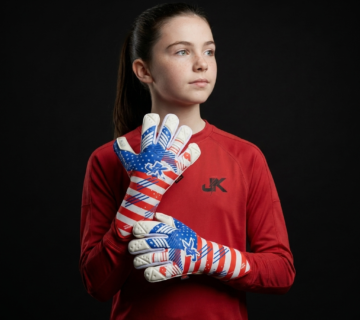
Why Expensive Gloves Could Be Your Biggest Mistake
If you are new to goalkeeping, or you are a parent buying your child’s first pair of goalkeeper gloves, there is one important lesson you should understand before spending your money:
The most expensive goalkeeper gloves are NOT necessarily the best goalkeeper gloves for beginners.
In fact, buying an expensive professional goalkeeper glove too early can sometimes mean paying considerably more for a glove that wears out considerably faster.
That may sound backwards.
With most sports equipment, paying more usually means getting something stronger, better made, and more durable.
Goalkeeper gloves are different.
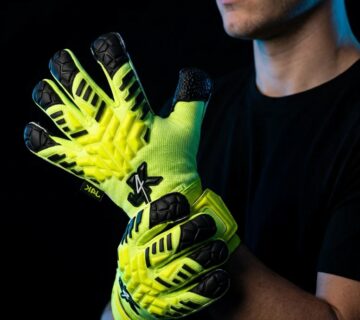
Professional goalkeeper gloves are generally designed to maximize grip, feel, flexibility, and performance.
They are not necessarily designed to survive months of incorrect diving, landing, and recovery technique.
That is extremely important when choosing the Best Goalkeeper Gloves for Beginners.
Why Beginner Goalkeepers Wear Out Their Gloves So Quickly
Every goalkeeper has to learn how to dive properly.
Nobody starts with perfect technique.
When beginner goalkeepers dive toward the ground, their natural instinct is often to put their hands down to protect themselves.
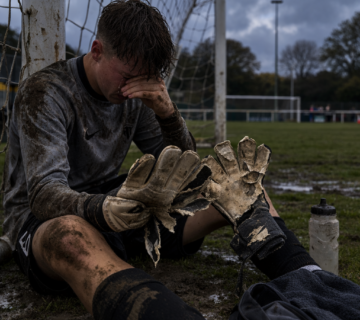
Unfortunately, this means the latex palms of their goalkeeper gloves hit the playing surface.
Sometimes the palms also slide across the turf as the goalkeeper lands.
Every time this happens, friction is created between the latex and the ground.
On natural grass, this can damage goalkeeper glove palms over time.
On artificial turf, the damage can happen much faster.
A young goalkeeper may dive 30, 40, or even 50 times during one goalkeeper training session.
If their palms repeatedly hit or drag across the turf, even good-quality goalkeeper gloves will eventually begin to wear.
The gloves are not necessarily faulty.
The goalkeeper is simply still learning the correct technique.
Getting Back To Your Feet Can Damage Gloves Too
One of the biggest causes of goalkeeper glove wear happens after the save has already been made.
The goalkeeper is lying on the ground and wants to get back onto their feet quickly.
Beginner goalkeepers often put the flat palms of their gloves onto the turf and push themselves back up.
This is something experienced goalkeepers gradually learn not to do.
Why?
Because goalkeeper glove latex is designed to grip a soccer ball.
It is not designed to repeatedly rub against the ground.
Every time a goalkeeper pushes themselves up using the palms, the latex is being pressed, twisted, and rubbed against the playing surface.
Repeat that throughout several practices and games and the palm can deteriorate quickly.
Correct goalkeeper technique does not just make you a better player.
It can also make your goalkeeper gloves last longer.
Artificial Turf Can Destroy Soft Goalkeeper Glove Palms
This is particularly important for goalkeepers in the United States because so much youth soccer is played and practiced on artificial turf.
Synthetic soccer fields can be extremely abrasive on goalkeeper glove latex.
Now combine:
- A beginner goalkeeper
- Incorrect diving technique
- Poor landing technique
- Palms regularly touching the turf
- An abrasive artificial surface
- A soft professional goalkeeper glove palm
You have the perfect combination for extremely fast goalkeeper glove wear.
In some cases, a beginner goalkeeper can cause substantial wear to a soft professional goalkeeper glove palm during one intensive training session or game.
That does not automatically mean the goalkeeper gloves are poor quality.
It can simply mean the wrong type of glove has been used for the goalkeeper’s experience level and playing surface.
This is why goalkeeper gloves should be selected based on:
Experience + Playing Surface + Intended Use
Not simply price.
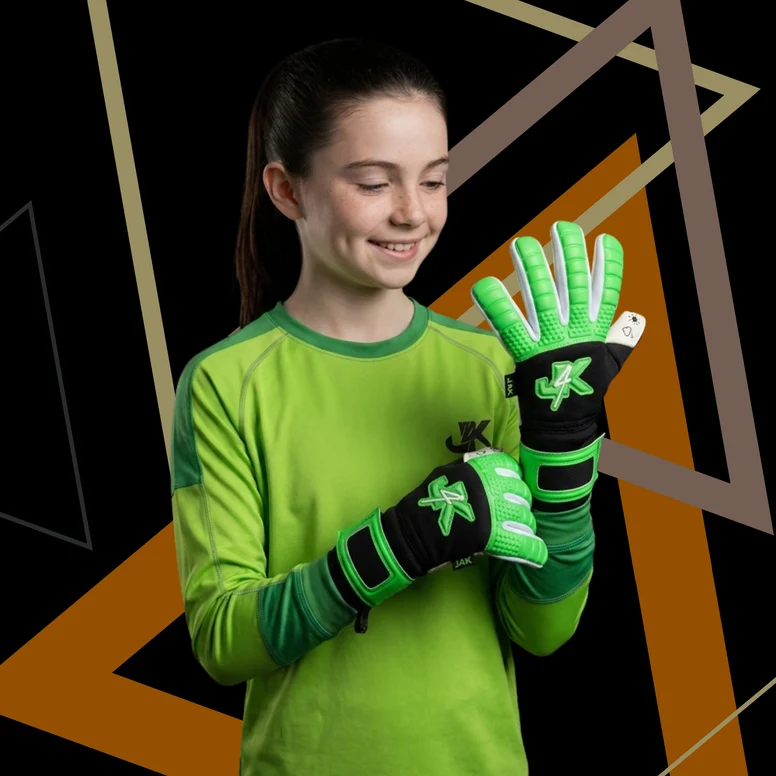
What Are The Best Goalkeeper Gloves for Beginners?
For most beginner goalkeepers, I would recommend starting around the $40 to $50 price range rather than immediately purchasing $80, $100, or $120+ professional goalkeeper gloves.
At this stage of development, durability is extremely important.
Look for goalkeeper gloves that offer:
- A durable latex palm
- Good everyday grip
- Comfortable fit
- Good wrist support
- Suitability for regular goalkeeper training
- Durability for artificial turf
- A palm designed for harder playing surfaces
J4K has developed goalkeeper gloves specifically for different uses, including:
- Goalkeeper training
- Artificial turf
- Hard ground
- Regular practice
- Match play
- Professional-level performance
If a goalkeeper is still developing basic diving, catching, and handling technique, choosing the correct training goalkeeper glove is far more important than buying the most expensive goalkeeper glove available.
The Biggest Mistake Parents Make When Buying Goalkeeper Gloves
This is probably the biggest misunderstanding in goalkeeper gloves:
Parents assume that a $120 goalkeeper glove should last longer than a $50 goalkeeper glove.
It sounds perfectly logical.
But goalkeeper gloves do not always work that way.
Premium professional goalkeeper gloves often use extremely soft latex.
Why?
Because professional goalkeepers want maximum grip and ball feel.
A softer goalkeeper glove palm can provide fantastic grip.
But there is a trade-off.
The softer and more performance-focused the latex becomes, the faster it can wear when exposed to abrasion.
Think about professional racing tires.
Racing tires provide incredible grip and performance.
But nobody expects them to last 50,000 miles.
They are designed primarily for performance.
Professional goalkeeper glove latex works in a similar way.
The priority is:
Grip. Feel. Performance.
Not necessarily maximum durability.
So putting an expensive professional goalkeeper glove onto a beginner who repeatedly lands palm-first on artificial turf can actually result in the expensive glove wearing out faster than a less expensive goalkeeper training glove designed with durability in mind.
That is why the Best Goalkeeper Gloves for Beginners are often not the most expensive goalkeeper gloves.Technique First. Premium Goalkeeper Gloves Later.
As goalkeepers improve, everything starts to change.
They learn how to:
- Dive correctly
- Land more safely
- Protect their goalkeeper glove palms
- Recover to their feet without using flat palms
- Catch the ball more consistently
- Look after goalkeeper gloves correctly
- Separate training gloves from match gloves
Once these techniques develop, moving into softer and more expensive goalkeeper gloves starts to make sense.
The goalkeeper can now benefit from increased grip and professional-level latex without unnecessarily damaging the palm.
A sensible goalkeeper glove progression might look like this:
Beginner Goalkeeper → Durable Training Gloves → Better Technique → Match Gloves → Professional Goalkeeper Gloves
There is absolutely no need to rush into premium goalkeeper gloves.

Parents: Buy For The Goalkeeper Your Child Is Today
Every parent wants to give their child the best soccer equipment possible.
But the most expensive product is not automatically the best product for their current stage of development.
Before buying goalkeeper gloves, ask yourself:
Where does my child practice and play?
Natural grass?
Artificial turf?
Hard ground?
Then ask:
How experienced are they?
Are they still learning how to dive?
Do they regularly push themselves back up using their palms?
Are their current goalkeeper gloves wearing badly around the heel of the palm?
Are the gloves mainly being used for training or games?
Those answers should help determine which goalkeeper gloves you purchase.
That is what choosing the Best Goalkeeper Gloves for Beginners really means.
It means choosing the best goalkeeper glove for the player right now, rather than buying the glove they may need several years into their development.
Why Goalkeepers And Parents Choose J4K Goalkeeper Gloves
J4K has specialized in goalkeepers since 1998.
More than 750,000 goalkeepers and goalkeeper parents have trusted J4K goalkeeper coaching and products.
One of the biggest reasons is value.
Depending on the model, goalkeepers can sometimes purchase two or even three pairs of J4K goalkeeper gloves for the price of one pair from some of the major goalkeeper glove brands.
J4K uses the same types of professional goalkeeper glove materials and latex technologies without asking families to pay an unnecessary premium simply for a famous logo, athlete sponsorship, or huge marketing campaign.
J4K offers goalkeeper gloves designed specifically for:
- Beginner goalkeepers
- Goalkeeper training
- Artificial turf
- Hard ground
- Match day
- Academy goalkeepers
- College goalkeepers
- Professional-level performance
So instead of simply buying the most expensive goalkeeper gloves, you can choose the glove that actually suits your goalkeeper.
Looking For The Best Goalkeeper Gloves for Beginners?
If you are looking for the Best Goalkeeper Gloves for Beginners, start with durability and playing surface.
Choose goalkeeper gloves based on:
Your experience + your playing surface + how you will use them.
Then, as your goalkeeper technique improves, progress toward softer professional goalkeeper glove palms designed for maximum match-day grip.
Try J4K Goalkeeper Gloves
Discover the J4K goalkeeper glove range:
Give your goalkeeper the right glove for where they are in their development today.
Not simply the most expensive glove on the shelf.
Join The FREE Total Goalkeeping Academy
Goalkeeper gloves are important.
But goalkeeper gloves cannot replace good technique.
If you want to improve your:
- Goalkeeper handling
- Catching technique
- Confidence
- Mindset
- Match-day performance
- Overall goalkeeper development
join our FREE Total Goalkeeping Academy.
Goalkeepers and parents can join here:
Learn the technique. Protect your goalkeeper glove palms. Develop your game. Then progress into the professional gloves.